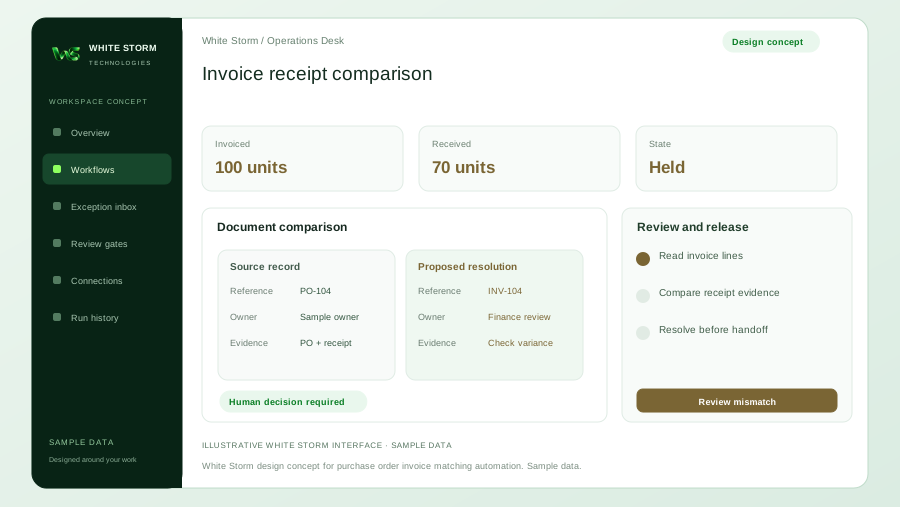
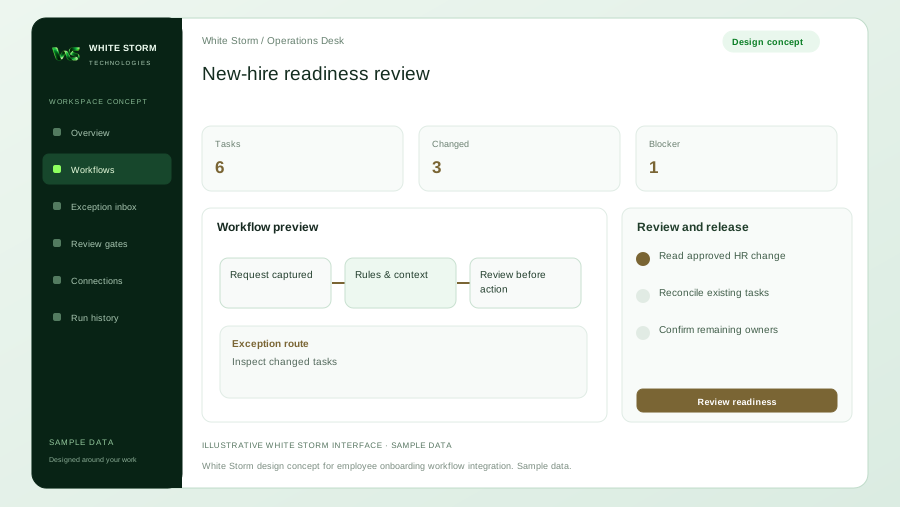
White Storm Technologies helps automate recurring processes across the systems your business already uses. We map how work arrives, what information each step needs, and who is responsible for decisions and exceptions. The result is a custom integration or workflow designed around an agreed operational outcome.
YOUR GOALS. OUR EXPERTISE.
WHO WE HELP
Built around your team.
For operations, customer service, finance operations, and professional service teams managing repeated handoffs.
The challenges we help solve.
Manual copying, unclear ownership, and repeated checks can slow a process even when each application works well on its own. A fragile automation can make the issue harder to diagnose if it silently fails or repeats an action. Useful process automation includes the path through ordinary work and the path for recovering from exceptions.
WHAT WE DELIVER
What we can build with you.
01
Process map and automation design
A map of triggers, systems, data handoffs, business rules, approvals, and owners. We identify opportunities to simplify the process before translating it into automation.
02
Connected business workflow
The agreed integrations, validation rules, status updates, and approval steps. AI-assisted classification or drafting can be included where it serves a defined task and has an appropriate review route.
03
Exception handling and handover
Visible failures, agreed recovery behavior, and guidance for operators. We document the integration accounts, dependencies, acceptance examples, and ownership needed to maintain the workflow.
ILLUSTRATIVE WORKFLOW
How the solution works.
01
Map the current process
Trace representative requests from start to finish, including delays and unusual cases. Agree the authoritative record, required business rules, and accountable owner for each step.
02
Connect and validate
Implement a scoped workflow with appropriate application access, input checks, and approval steps. Define how repeated events and partial completion should be handled.
03
Test recovery and transition
Test missing inputs, invalid records, unavailable applications, and declined approvals. Validate the results with process owners and agree the transition and support arrangement.
A CLEAR STARTING POINT
What we need from you.
A process owner and examples of completed or failed requests
The systems, business rules, and approval requirements involved
API documentation or supported integration options and test access
Volume, timing, reporting, and operational support needs
Systems & integrations.
We assess access, supported APIs, and suitability during discovery. These tools are options to evaluate for your project.
CRM, helpdesk, project, or business management applications after access review
Forms, spreadsheets, and databases used in the process
Document and file repositories
Email, notifications, and approval interfaces authorized for the workflow
Illustrative example: client onboarding handoffs A professional services business could connect an approved enquiry to its CRM, onboarding checklist, and document workspace. The workflow would validate required information, assign tasks to the responsible people, and pause when a commercial or account decision needs approval.
BEFORE WE BEGIN
Questions worth asking.
Can we automate a process that still needs approval?
Yes. The workflow can collect information and prepare the next step, then wait for an accountable person. Approval rules and what happens after a rejection or delay are part of the process design.
Can you connect our existing applications?
We assess the applications, available APIs, subscriptions, permissions, and limits first. The proposal states the supported connections and any constraints or changes required.
Will we need to replace our current systems?
Many projects focus on connecting existing systems. During assessment we identify whether their interfaces can support the workflow and discuss any gaps before proposing a change.
Who maintains the automation?
Ownership and support are agreed in scope. We can provide a handover runbook for your team, and discuss ongoing monitoring or maintenance separately according to the workflow and hosting environment.