A platform subscription and a custom-development quote cover different things. A useful comparison follows the complete study from instrument preparation through collection, analysis, and maintenance, then asks which route meets the requirement with the least avoidable work and risk.
HOW WHITE STORM WOULD APPROACH IT
A design you can explore.
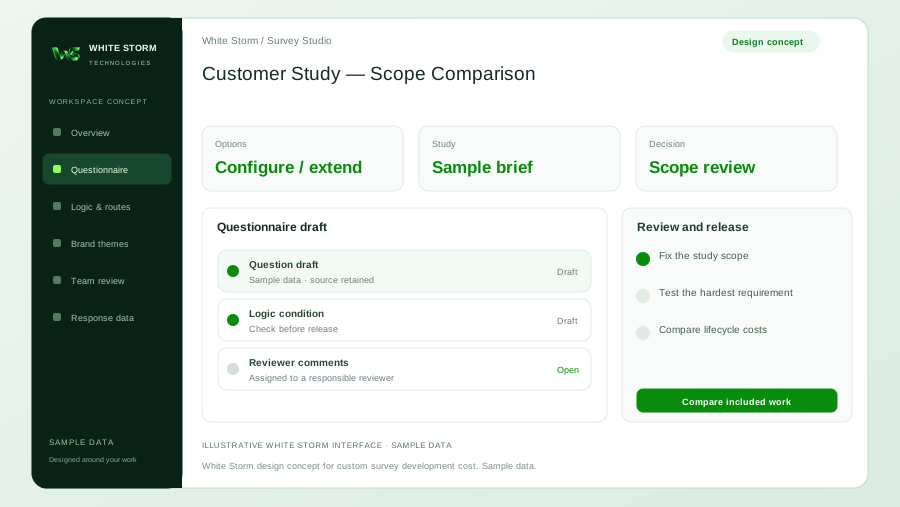
Illustrative planning concept; sample scope states are fictional and no price or saving is claimed.
Interactive design concept with sample data. This illustrates a possible project; it is not a delivered client system or an available AI product.
 WHITE STORMSurvey Studio
Customer Study — Scope Comparison
Fictional research team comparing platform configuration with a custom survey component.
Fix the study scope
Inspect assumptions
Inputs, tool access, exception handling and acceptance criteria would be agreed with your team before implementation.
Estimate time and cost for your workflow
These editable figures are an illustrative scenario, not a White Storm quote or a forecast. Assisted work, review and expected rework are counted separately.
Enter all costs in the selected currency. Changing the label does not convert amounts.
At the illustrative defaults: 25 hours of monthly capacity, INR10,000 of capacity value after running costs, and an eight-month indicative recovery period.
Time capacity is not guaranteed cash savings. Real benefit depends on workload, quality, redeployment, integrations, licences, hosting, model use and maintenance. A negative result can favour a simpler configured solution.
Hours = monthly cases × (current − assisted − review − rework minutes) ÷ 60. Value after running costs = hours × loaded hourly cost − monthly running costs. Recovery = one-off costs ÷ positive monthly value.
Fix the study boundary before comparing prices
A fictional customer-insight team wants a branded, multilingual product study with repeated questions for selected products. One supplier quotes platform configuration; another quotes a custom application. The totals are not comparable until both cover the same question set, languages, distribution, recruitment responsibilities, export format, review cycles, and operating period.
We would turn the brief into a common scope sheet. Separate one-time development from fieldwork and ongoing operation. State who recruits genuine respondents, who pays incentives, and who reviews findings. A low programming price may exclude translation review or complex exports. A larger build quote may include capabilities the study never needs.
Compare configuration before assuming replacement
Qualtrics documents themes and looping. SurveyJS documents a separate form-rendering library and custom development options. This makes the choice broader than a plain default form versus software written from scratch. A buyer can configure, extend a platform, embed a component, or commission a separate application.
We would request a small capability demonstration around the hardest requirement. If the incumbent handles the repeated product route and acceptable branding, retain that evidence in the comparison. Verify actual license access and supplier terms without assuming current entitlements or future prices. The assessment should identify the specific gap a custom component would close.
Build a lifecycle cost worksheet
The worksheet should include research design, programming, brand assets, translations, accessibility review, test cases, release changes, distribution, data preparation, analysis review, and handover. For a hosted application, add hosting, monitoring, backups, dependency updates, and support. For AI-assisted work, include model charges and the people checking generated questions, code, or analytical drafts.
Use the expected operating period rather than comparing one month of a subscription with several years of development ownership. Identify fixed and variable costs, including response-related charges where applicable and separately quoted supplier work. A configurable spreadsheet is sufficient; the value comes from common assumptions and visible exclusions rather than an elaborate financial model.
Use hypothetical numbers to expose the tradeoff
Suppose, purely hypothetically, direct configuration takes twelve hours and a reusable custom component takes forty hours initially plus four hours per later study. If later configurations still require twelve hours, reuse begins to offset the initial difference only after enough genuinely comparable studies. Add maintenance, regression testing, and changes to the questionnaire before treating that difference as a saving.
These figures are illustrative arithmetic, not White Storm estimates or measured results. A reusable component might need substantial revision when the task changes. A platform might also support copying and templates that reduce later configuration effort. Compare realistic repeat scenarios for both routes and show uncertainty instead of assigning every future study to the custom solution.
Include the price of incorrect or unusable collection
A route defect discovered after launch may require pausing invitations, identifying affected records, amending the instrument, and deciding whether recollection is necessary. The scale depends on the defect and fieldwork arrangement. We would allocate review and test effort before launch rather than treating those activities as optional costs that can disappear.
The acceptance scope should cover the difficult routes, mobile behavior, translations, final exports, and failure recovery. Test fixtures are fictional and excluded from findings. A genuine pilot can reveal comprehension issues the program tests miss. Its recruitment and review time belongs in the budget even when the AI-generated draft initially appears complete.
Check who carries the continuing work
A custom application needs a named owner for deployment, access, storage, content changes, and incident response. A platform-based study also needs ownership of forms, exports, accounts, and configuration updates. The two routes distribute responsibilities differently; neither eliminates them. We would record those assignments before recommending an operating model.
Request handover formats, dependency information, the process for changing questions, and support boundaries. Clarify commercial and intellectual-property terms in the engagement rather than inferring them from the technology stack. If a separate analysis process is included, identify who approves coding rules and how future analysts reproduce the outputs.
Buy evidence for a decision before buying the whole build
White Storm Technologies would investigate the hardest requirement first and provide a scoped comparison: a baseline configuration, remaining gaps, a custom option, acceptance examples, and a cost worksheet with assumptions. This can support an informed decision without pretending that every branded survey needs bespoke software.
The accompanying screen is a fictional planning concept. It is not a pricing calculator, quote, or client result. The right route is the one that fits the actual study, collection plan, review capacity, and future work. A conditional recommendation is more useful than a universal claim that AI or custom code will make research cheaper.
Sources & further reading
Research reviewed on 17 October 2026. Platform capabilities depend on version, plan and configuration. Primary references checked for this article. Practical examples are illustrative, not client results.
Apply this to your project.
Tell us what your customer survey needs to do. We can compare platform configuration and custom development, including branding, question types, and maintenance costs.
Explore AI Surveys & Data Analysis