A survey can use your logo and still feel disconnected from the customer journey. The buying question is which parts of that experience need to change, and whether those changes require new software or better use of the platform you already own.
HOW WHITE STORM WOULD APPROACH IT
A design you can explore.
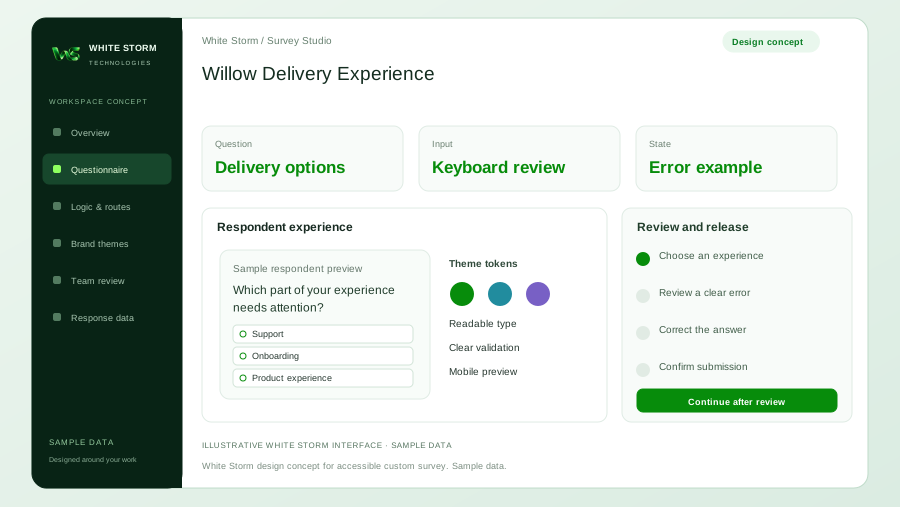
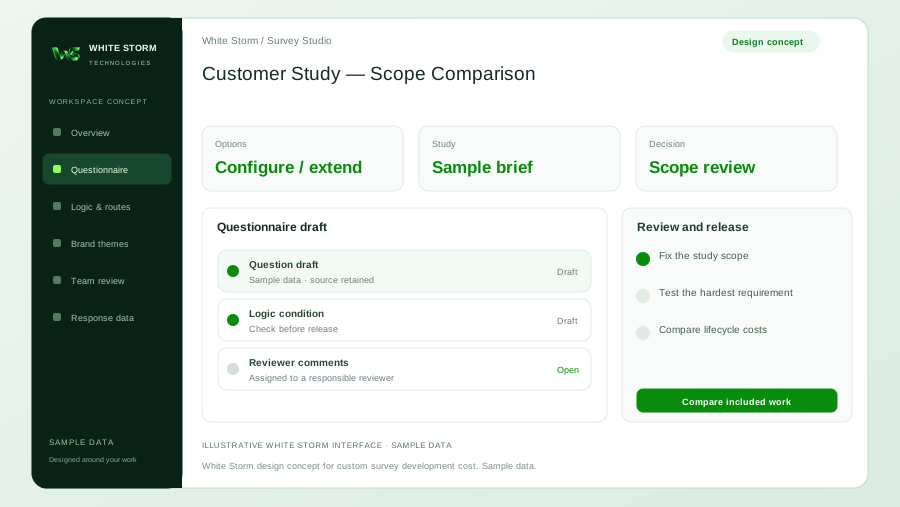
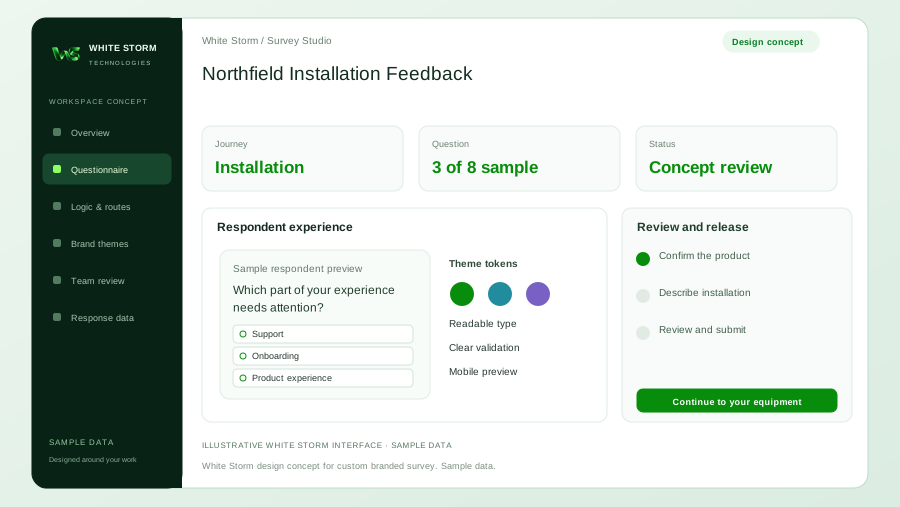
Illustrative branded survey concept; fictional organization and interface, not a delivered client product.
Interactive design concept with sample data. This illustrates a possible project; it is not a delivered client system or an available AI product.
 WHITE STORMSurvey Studio
Northfield Installation Feedback
Fictional equipment supplier: feedback after a completed installation.
Confirm the product
Review your selection
Inputs, tool access, exception handling and acceptance criteria would be agreed with your team before implementation.
Estimate time and cost for your workflow
These editable figures are an illustrative scenario, not a White Storm quote or a forecast. Assisted work, review and expected rework are counted separately.
Enter all costs in the selected currency. Changing the label does not convert amounts.
At the illustrative defaults: 25 hours of monthly capacity, INR10,000 of capacity value after running costs, and an eight-month indicative recovery period.
Time capacity is not guaranteed cash savings. Real benefit depends on workload, quality, redeployment, integrations, licences, hosting, model use and maintenance. A negative result can favour a simpler configured solution.
Hours = monthly cases × (current − assisted − review − rework minutes) ÷ 60. Value after running costs = hours × loaded hourly cost − monthly running costs. Recovery = one-off costs ÷ positive monthly value.
Describe the break in the customer journey
Imagine a fictional equipment supplier asking customers about installation. Its website explains products through clear diagrams, but the feedback link opens a dense questionnaire with unfamiliar navigation. The team wants a consistent experience and assumes a custom application is the answer. We would first investigate the actual break: unclear invitation, abrupt domain change, difficult terminology, repetitive questions, or a visual mismatch. Each problem points to different work.
A theme cannot repair a questionnaire that asks customers to evaluate products they never used. Conversely, rewriting the whole interface may add expense when adjusting wording, routing, spacing, and branding would address the issue. Gather screenshots of the journey, the approved brand system, representative devices, and the questions customers struggle to interpret before choosing an implementation route.
Give native styling a fair trial
Qualtrics documents styling and custom CSS options; SurveyJS documents themes and appearance customization. Those capabilities mean standard survey software is not limited to an identical unchangeable appearance. We would configure the existing tool against a short design brief before describing a gap as a platform limitation.
The comparison should show the same questionnaire in each candidate, including error states and a completed submission. Evaluate typography, content width, selection states, mobile layout, and the transition back to the host site. An approved theme is often the least demanding route to maintain. A custom renderer deserves consideration when the required interaction or navigation remains materially different after this trial.
Specify the experience beyond the logo
For the installation example, a distinct experience might present an equipment illustration beside a task-specific question, let customers review their selected product, and retain the same support navigation as the website. We would document those behaviors separately from color and font choices. The brief would also explain how someone with no matching product reaches an appropriate ending.
Specify field identifiers, selection rules, back-button behavior, validation messages, progress language, and submission confirmation. Explain which parts researchers can edit without a developer. If the interface uses a component library, identify its owner and how survey controls inherit future changes. This turns a visual preference into a scope that can be estimated and accepted.
Design the data handoff with the interface
A beautiful answer card still needs to produce an understandable response record. We would map every displayed product and answer option to stable identifiers, distinguish unanswered from not shown, and record the instrument version. The storage design should retain enough context to interpret the answer without copying unnecessary account details into the survey.
An embedded or custom form may connect to a research database through an approved endpoint. The team needs an explicit success response, retry handling, and a way to investigate failed submissions. Browser completion alone should not be treated as proof that the research record was stored. Credentials and integration ownership belong in the operating plan.
Use a review set that includes awkward moments
Test the longest product name, missing image, invalid answer, narrow viewport, keyboard-only journey, and a connection failure during submission. Ask reviewers to return to an earlier answer and change the selected product. Confirm what happens to dependent answers and whether the export still describes the final journey correctly.
The acceptance set should include an understandable error summary, visible focus, legible text at zoom, and an honest confirmation state. Researchers review whether the presentation changes the meaning of a question. Brand owners review the design; they do not substitute for respondents testing comprehension. Test the survey with invited respondents and keep their feedback separate from fictional test responses.
Compare the economics over the life of the survey
The cost comparison includes configuration, design review, custom components, hosting, release testing, and future changes. If AI assists with CSS or questionnaire drafts, include the review and correction effort plus any model charges. A hypothetical saving of three setup hours is not a saving if six hours of regression testing are introduced; those figures illustrate a calculation, not a forecast.
Custom development becomes more defensible when the distinct interaction is reused, the organization can maintain it, and the existing platform trial exposes a specific unmet requirement. For an occasional short study with routine questions, a configured theme may remain the stronger choice. Compare complete operating proposals rather than only the first build price.
Commission a bounded design comparison
White Storm Technologies would propose a focused comparison using one representative section, one difficult route, and an export sample. The deliverables could include a configured baseline, an illustrative custom concept, a gap register, and acceptance examples. That gives the buyer evidence for deciding whether to configure, extend, or build.
The accompanying screen is a fictional brand concept, not a delivered product or evidence of higher response rates. Research findings must come from actual responses under an agreed collection plan. Interface quality can make participation clearer, but it does not establish representativeness, remove questionnaire bias, or guarantee business results.
Sources & further reading
Research reviewed on 17 October 2026. Platform capabilities depend on version, plan and configuration. Primary references checked for this article. Practical examples are illustrative, not client results.
Apply this to your project.
Tell us what your customer survey needs to do. We can compare platform configuration and custom development, including branding, question types, and maintenance costs.
Explore AI Survey Design