AI can turn a brief into a plausible questionnaire quickly. The valuable next step is making that draft precise enough to program, review, and test. A working preview is an intermediate artifact rather than proof that the survey answers the research question.
HOW WHITE STORM WOULD APPROACH IT
A design you can explore.
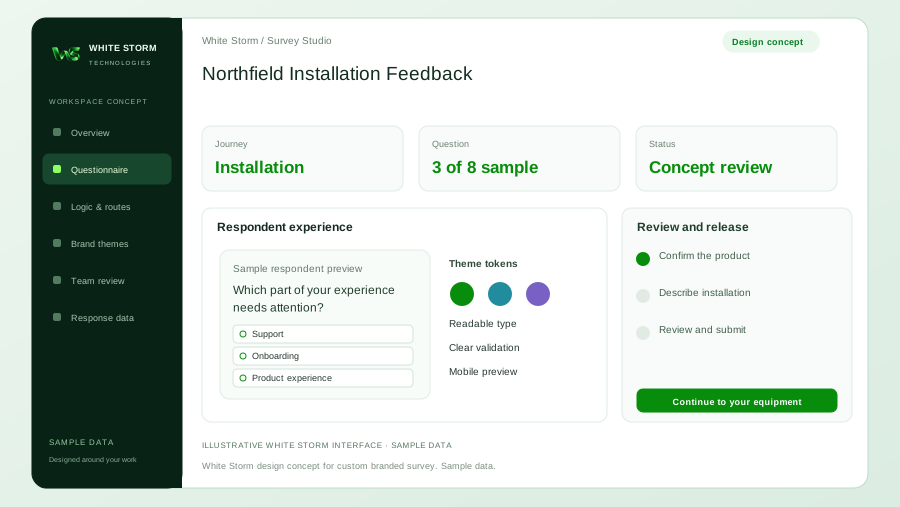
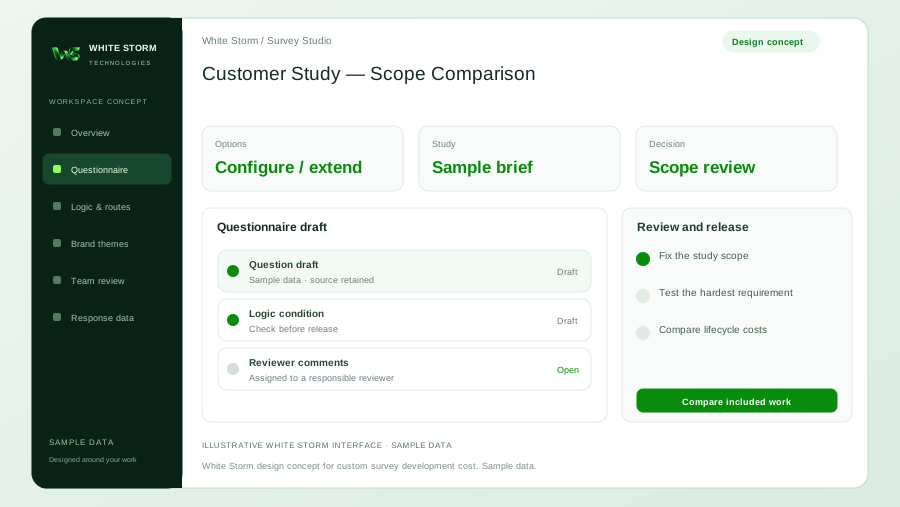
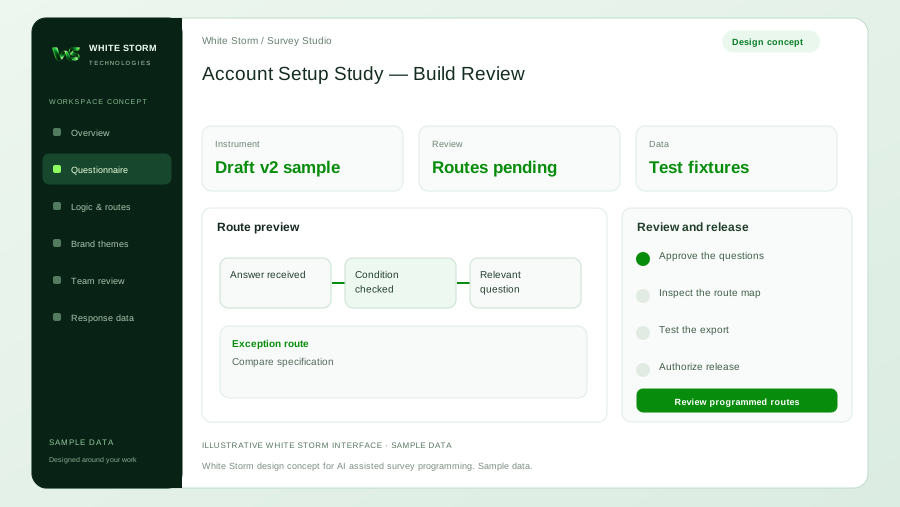
Illustrative authoring and review concept; sample states are fictional and do not describe a delivered product.
Interactive design concept with sample data. This illustrates a possible project; it is not a delivered client system or an available AI product.
 WHITE STORMSurvey Studio
Account Setup Study — Build Review
Fictional subscription service reviewing an AI-assisted survey specification.
Approve the questions
Compare specification
Inputs, tool access, exception handling and acceptance criteria would be agreed with your team before implementation.
Estimate time and cost for your workflow
These editable figures are an illustrative scenario, not a White Storm quote or a forecast. Assisted work, review and expected rework are counted separately.
Enter all costs in the selected currency. Changing the label does not convert amounts.
At the illustrative defaults: 25 hours of monthly capacity, INR10,000 of capacity value after running costs, and an eight-month indicative recovery period.
Time capacity is not guaranteed cash savings. Real benefit depends on workload, quality, redeployment, integrations, licences, hosting, model use and maintenance. A negative result can favour a simpler configured solution.
Hours = monthly cases × (current − assisted − review − rework minutes) ÷ 60. Value after running costs = hours × loaded hourly cost − monthly running costs. Recovery = one-off costs ÷ positive monthly value.
Separate three different drafting jobs
A fictional subscription business wants to understand why administrators abandon account setup. Its brief mixes a research objective, suggested questions, and ideas for a conversational interface. We would separate instrument design, executable survey rules, and visual presentation. Asking one model prompt to resolve all three makes it difficult to notice where an assumption entered the build.
First agree the decision the study will support and the eligible population. Then define each question, answer code, routing condition, and output variable. Finally choose presentation details. AI can assist across these tasks, but each artifact needs an identifiable reviewer. A product owner approving a screen does not automatically validate question wording or an analyst's intended comparison.
Use the capabilities already available
Microsoft documents Copilot-assisted form drafting. SurveyJS documents JSON-based survey definitions and JSON validation. These are practical starting points for AI-assisted creation; buyers do not need to assume every question must be handwritten or that generated configuration is inherently unsuitable.
We would inspect the organization's current builder and access before proposing a separate generation tool. Native drafting may cover the first instrument well. A custom assistant is more useful when the organization needs a controlled house specification, repeatable conversions, or review records across many studies. Confirm supported interfaces rather than assuming an AI assistant can publish through any platform.
Give the model a specification with boundaries
The input should state the audience, research objective, approved terminology, maximum intended burden, required measures, and exclusions. For the setup study, a generated question must distinguish an administrator who never began from one who encountered a permissions error. The model should flag unresolved distinctions rather than silently choosing a route.
We would require a structured draft containing stable IDs, wording, answer options, requiredness, relevance rules, and analysis notes. Every proposed new question should identify the objective it serves. A reviewer can then remove attractive but unnecessary material before programming. Supplied customer comments should be minimized or de-identified according to the agreed sharing arrangement.
Compile and inspect rather than blindly publish
An AI-produced configuration can contain valid syntax with incorrect intent. We would validate the schema, resolve referenced identifiers, inspect unreachable questions, and check endings against the approved instrument. A controlled preview would show the difference between the last accepted version and the new draft.
The programming workflow should preserve the reviewed specification alongside the executable definition. If a developer adjusts a generated rule, record the reason so a later regeneration does not overwrite the correction. Publishing remains a separate approval step. A model should not receive production access simply because it helps draft expressions or translate a researcher's notes into configuration.
Test routes, responses, and output together
Create fictional test cases for eligible, ineligible, uncertain, and interrupted journeys. For each case, specify expected questions, allowed answers, ending, and exported variables. Include a respondent changing an earlier answer, optional fields left blank, and text containing punctuation or non-English characters.
Automated checks can replay these fixtures, but a researcher still needs to inspect comprehension and response burden. We would compare exported records with expected codes instead of only observing that the final button works. Keep fictional test responses in a test environment, or mark them clearly and exclude them from the research findings. A real pilot collects genuine responses and reports them separately from engineering evidence.
Measure the work that AI actually changes
Estimate time for specification, model-assisted drafting, researcher review, programming, test repair, and release approval. A hypothetical draft produced in twenty minutes may still require a day of review; those figures describe possible accounting categories, not White Storm delivery performance. Compare the accepted instrument, not the speed of the first generated screen.
Where a custom generation service is proposed, include model usage, hosting, maintenance, and the effect of changing platform schemas. A simple study may be cheaper to configure directly. Repeated complex studies may justify reusable validation and conversion tooling if the organization has enough work and reviewer capacity to benefit from it.
Make the handover useful to the next researcher
White Storm Technologies would design the handover around an approved instrument, versioned program, route test set, export dictionary, and known limitations. The buyer should know which parts AI drafted and which people approved. The proposal should identify ownership of reusable templates and responsibility for future platform changes.
The illustrative screen shows a review workspace for a fictional study, not a production survey authoring product. AI assistance does not create evidence about customers. Only the agreed collection process supplies respondents, and qualified research review determines how the actual answers support the intended decision. Review responsibilities should be explicit before release.
Sources & further reading
Research reviewed on 17 October 2026. Platform capabilities depend on version, plan and configuration. Primary references checked for this article. Practical examples are illustrative, not client results.
Apply this to your project.
Talk to us about programming your survey, from question behaviour and routing to test responses and analysis-ready exports, with researcher approval before release.
Explore AI Survey Design