Start with the job the learner needs to complete
A learner asking why a fraction changes during simplification needs teaching support. A learner asking where to submit an application needs an institutional answer. Both interactions can use a conversational interface, but they require different content, permissions, escalation paths, and measures of success. Buying a generic chatbot before resolving this distinction creates an unclear implementation brief.
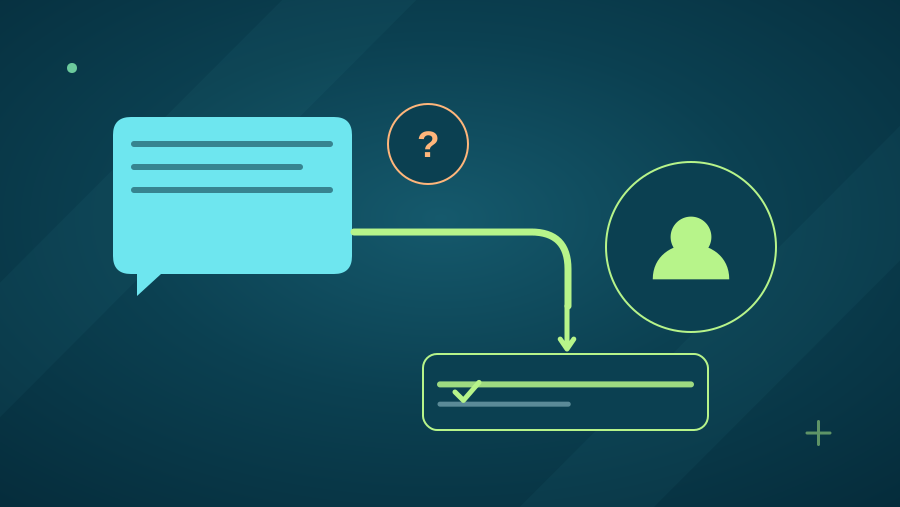
Describe the first workflow as a sequence: the person arrives with a question, the assistant uses approved information, the person takes a next step, and a named team handles exceptions. If that sequence crosses both learning and administration, define separate modes with visible boundaries. A friendly conversation alone does not establish that either job has been completed.
What an AI tutor must know
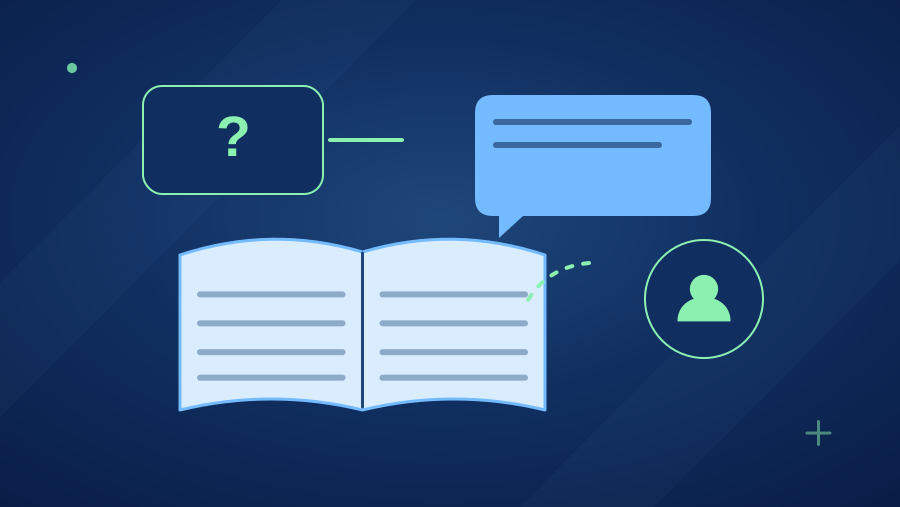
A tutoring assistant needs a defined curriculum, learner level, instructional approach, and policy for revealing answers. It may ask a diagnostic question, offer a hint, check a worked step, or suggest practice. Subject specialists should decide which of those behaviours fit the learning objective. A correct final answer can still be poor tutoring if it removes the reasoning the learner needs to practise.
An illustrative algebra pilot might cover rearranging linear equations in one module. Its reference set would include teacher-approved explanations, common misconceptions, and a small bank of review tasks. An evaluator would check whether the hint identifies the relevant operation and whether the student can complete a fresh problem afterwards. Conversation length would be a secondary operational measure.
What a student-support chatbot must know
A support assistant needs approved service information: dates, eligibility explanations, office contacts, application steps, and links to forms. Content owners and review dates matter because a confident answer based on an old handbook can send a student to the wrong process. Where an answer depends on a personal record, authenticated access and an explicit permission model become separate requirements.
An illustrative admissions assistant could explain the published document checklist and link to the application portal. A request to waive a requirement would move to admissions staff. The assistant should explain that a person will review the exception, collect only the agreed minimum details, and show the actual contact route or ticket confirmation. It should never imply that a policy explanation is an offer of admission.
Compare requirements before comparing demos
Use the same realistic questions across suppliers and ask them to show their evidence and failure behaviour. Include missing information, contradictory source documents, accessibility needs, and a direct request for a person. UNESCO guidance supports human agency and educational validation; the practical procurement implication is to assign educators and service owners explicit review roles.
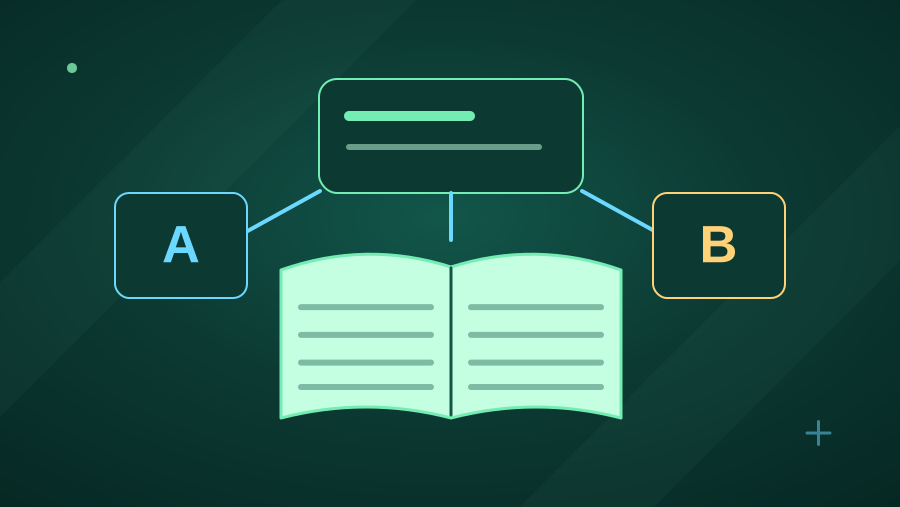
| Decision | Tutor | Student-support chatbot |
|---|---|---|
| Content authority | Curriculum and teaching team | Policy and service owners |
| Successful interaction | Learner makes a useful next learning step | Student reaches a correct answer or service route |
| Important boundary | Assessment and answer-revealing rules | Exceptions and personal decisions |
| Typical pilot evidence | Quality of feedback and independent learning tasks | Answer correctness and completed handoffs |
Choose a first release that staff can maintain
Select one audience, one content boundary, and a manageable set of supported tasks. A course tutor and an admissions assistant may eventually share infrastructure, but their source collections and permissions should remain distinguishable. Assign a person to approve updates, review unresolved cases, and pause an unsafe feature. Include that time in the delivery plan.
For institutions in India, the US, and the UK, local curriculum terms and institutional processes should shape examples and content. Those differences need discovery with the institution. They do not justify assuming that every college uses the same admission rules, that every district needs the same integration, or that a national label establishes a privacy requirement.
Turn the choice into a project brief
A useful brief names the workflow owner, intended users, approved sources, system connections, forbidden actions, escalation destination, and pilot evidence. Add how students will know they are interacting with AI and how they can get equivalent human support. Ask the delivery partner to demonstrate the complete journey using your sample materials.
White Storm Technologies scopes custom education AI projects around these decisions. An initial discussion is most useful when it includes a representative curriculum unit or service document and a few questions the existing team finds difficult to handle consistently. The resulting scope should describe deliverables and acceptance criteria rather than promise a universal assistant.
Sources & further reading
Primary references checked for this article. Practical examples are illustrative, not client results.
Apply this to your project.
Discuss AI learning tools for your institution, from curriculum support to student services, with approved content, appropriate access, and educator or staff review.
Explore EdTech & AI Learning