Define the boundary of automated help
A student-support chatbot can explain approved processes and help a student locate the right service. Its boundary becomes more important when a question concerns an exception, a personal record, a complaint, or a decision only authorised staff can make. Write those boundaries into the workflow before drafting conversational responses. The model should not be the institution's only mechanism for deciding who receives human attention.
Start with a service map showing common question types and their responsible teams. Distinguish giving information from taking action. Explaining how to request an extension differs from granting one; linking to a fee policy differs from resolving a disputed charge. That distinction lets staff determine where the assistant may answer, where it may collect details, and where it must stop.
Use explicit escalation triggers
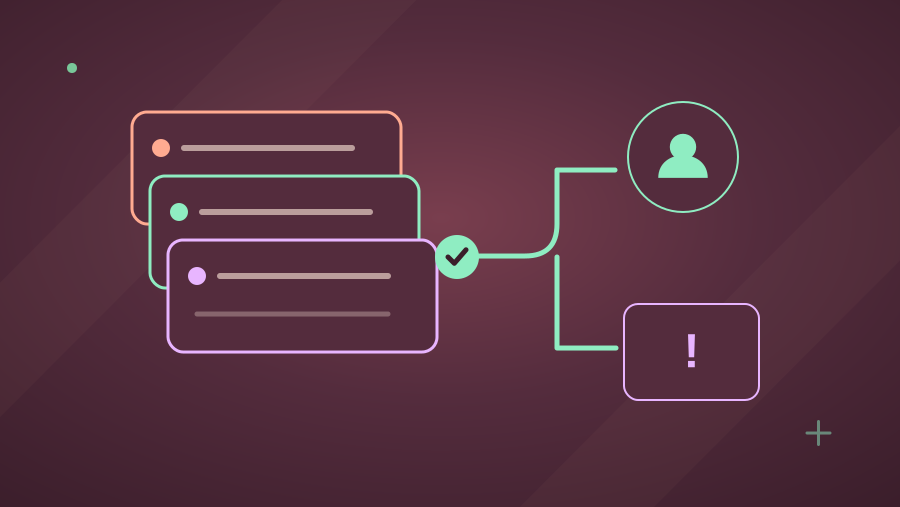
Create rules for requests outside approved content, contradictory policies, repeated misunderstanding, and a direct request to speak to a person. Add service-specific cases such as accommodation requests, formal appeals, disputed payments, or safeguarding concerns. Relevant institutional teams should define those routes and the approved wording. Do not rely only on the model's self-reported confidence.
An illustrative support exchange might begin with a question about a published submission deadline and move to a request for an exception after illness. The assistant can provide the official extension process and offer the approved staff route. It should not request detailed medical information in the chat simply to make the conversation feel personalised. The handoff should collect only what that team has agreed it needs.
Design the handoff as a real transaction
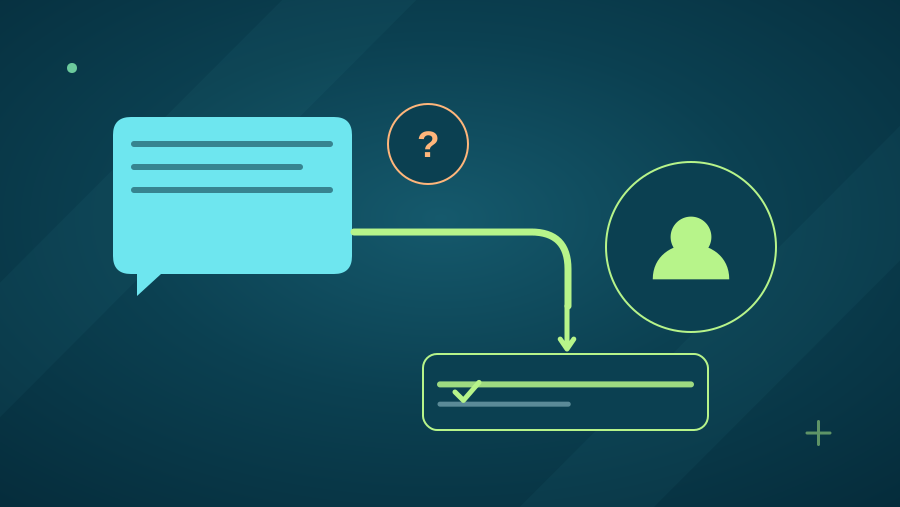
Define the destination, minimum fields, student consent or acknowledgement where required by the workflow, and the confirmation shown after delivery. A useful handoff may include a concise question summary, the relevant source already shown, and a contact method. Staff should be able to distinguish a student's own words from an AI-generated summary. Let the student correct material details before submission.
If the destination system returns a ticket identifier, display it accurately. If the connector is unavailable, say the request has not been delivered and provide the institution's supported alternative. A reassuring phrase such as someone will be in touch is misleading when no receiving team or delivery confirmation exists. Include this failure in demonstrations and acceptance tests.
Set expectations about timing and ownership
Agree who monitors each queue, how priority is assigned, and what happens outside staffed hours. Publish only response-time information that the institution actually supports. An assistant available at any time should not imply that staff are also available at any time. Show office hours or an approved contact page where useful.
An illustrative admissions team could receive application-process questions in its normal service queue while accessibility requests follow a separate approved route. The chatbot should not copy sensitive details into both queues for convenience. Define reassignment, duplicate handling, and ownership when a question spans services so the student is not left repeating the same information without a clear next step.
Test escalation quality, not just answer rates
Review whether the assistant escalates the right cases and whether staff receive enough information to act. A low escalation count can hide unanswered questions, while a high count may indicate poor source coverage or a deliberately cautious pilot. Classify the reasons rather than treating either number as a standalone success measure.
Use sample conversations where the student changes topic, corrects a fact, requests a person immediately, or includes unrelated personal information. Check that summaries preserve the actual request and do not invent intent. OWASP's prompt-injection guidance is relevant when user messages or retrieved content might try to redirect system behaviour; access and tool controls should remain outside the generated reply.
Maintain the service boundary over time
Assign a content owner and an escalation owner for each topic. Review unresolved conversations using the institution's approved access and retention process. Update source material or routing rules when a recurring issue appears, then retest representative cases. Keep a visible contact path available if the chatbot is paused or unavailable.
- List decisions the assistant cannot make and questions it must hand to staff.
- Verify queue ownership, delivery confirmation, and an alternative contact route.
- Minimise the information collected and separate student text from generated summaries.
- Review missed escalations and unnecessary escalations together with service teams.
Sources & further reading
Primary references checked for this article. Practical examples are illustrative, not client results.
Apply this to your project.
Discuss a student-support chatbot that uses approved institutional information and connects unresolved questions to staff, with clear confirmation when a support request is created.
Explore Education Chatbot Development