Treat the draft as the start of a teaching decision
AI can be incorporated into a workflow for drafting lesson outlines, practice questions, examples, and rubric language. The useful design question is where it helps an educator make a better or faster decision and what review remains necessary. Producing a large quantity of text is not an educational outcome. The material must fit the objective, learners, classroom conditions, and assessment context.
Define the teacher's control over inputs, output format, revisions, and publication. A practical assistant should make it easy to reject a draft, change assumptions, and see the reference material used. It should not quietly move generated questions into a student-facing activity. The institution should decide who is allowed to approve publication and how that approval is recorded.
Use a brief that teachers can inspect
Ask for the learning objective, age or course level, prior knowledge, allotted teaching time, required terminology, and any prohibited content. Provide the relevant curriculum reference and the intended task type. A short structured brief often exposes missing assumptions more clearly than an open request to create a lesson. Keep identifiable student information out of routine drafting inputs.
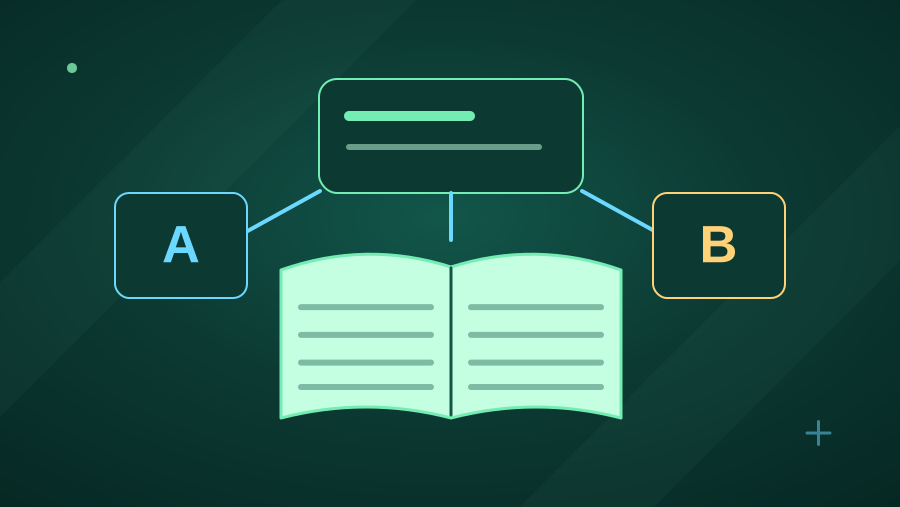
An illustrative history request might ask for a source-comparison activity using two teacher-approved excerpts, with prompts that distinguish observation from interpretation. The brief could require students to cite the excerpts and could exclude outside factual claims. Reviewers can then inspect whether the activity actually exercises comparison rather than becoming a generic comprehension worksheet.
Review question quality at several levels
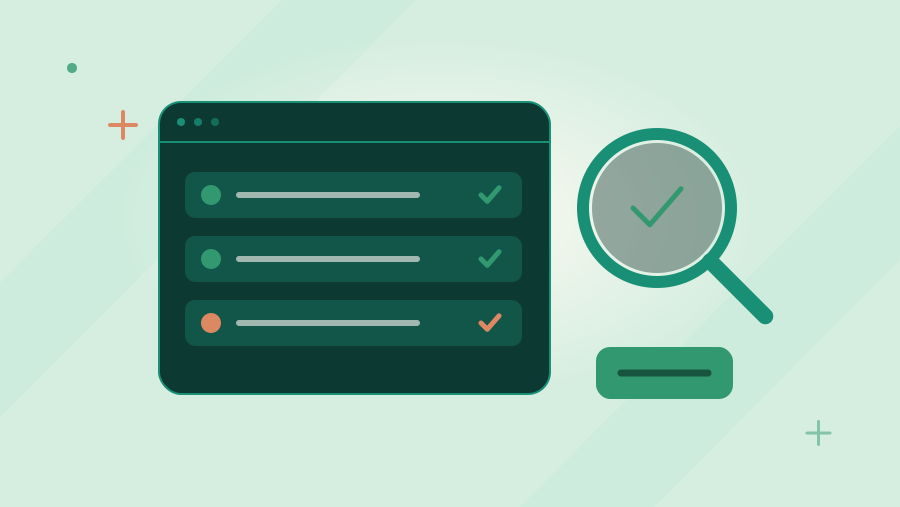
Check factual correctness, curriculum alignment, difficulty, wording, and the relationship between the question and its expected answer. Multiple-choice items also need plausible alternatives that do not introduce ambiguity. A question can be grammatically clear yet have more than one defensible answer. Test worked solutions and ensure that mark-scheme language reflects the reasoning the teacher wants to assess.
For an illustrative mathematics practice set, review whether the items vary meaningfully in the concept practised and whether the answer key uses the taught method. Changing only names and numbers may create the appearance of variety without addressing a different misconception. The assistant should help the educator inspect coverage, including what the set leaves untested.
Make adaptation explicit
Adapting reading level or presentation should preserve the educational objective and important qualifications. Ask the assistant to state what it changed: sentence structure, vocabulary support, examples, or task scaffolding. Educators can then assess whether the adaptation supports access without changing the concept being assessed. Avoid assuming that a model's description of difficulty matches the institution's learners.
Accessibility review should cover the final material, including headings, tables, diagrams, and alternative text. If a draft includes a diagram description, check that it communicates the relevant instructional information. W3C's accessibility resources can inform the review. Automated text generation does not establish that a worksheet or its publication format is accessible to every intended learner.
Create a controlled publication path
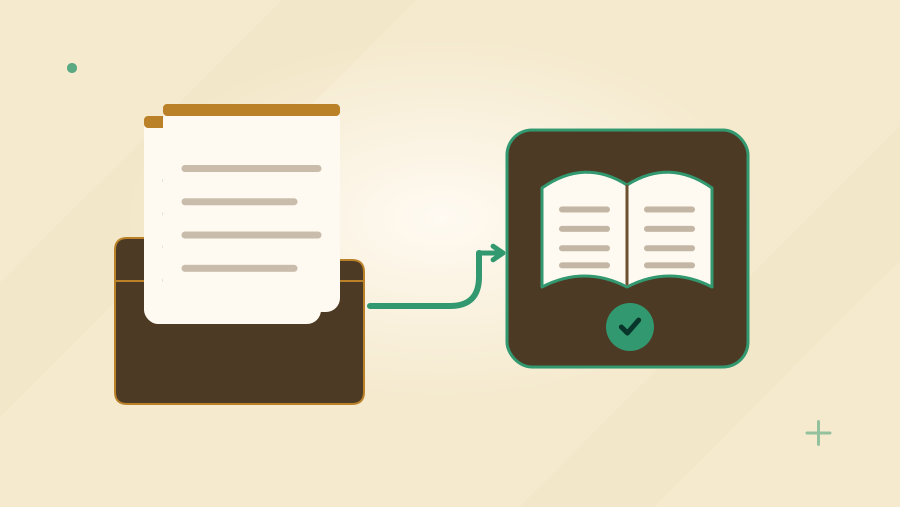
Use a small sequence: prepare a brief, generate a draft, review it against a rubric, revise, approve, and publish through the agreed platform. Keep the approved version separate from rejected drafts. Record the source collection and configuration version where that helps later investigation. Decide who can update a published item and how an error reported by a learner reaches the owner.
The Department for Education distinguishes considerations for staff use and pupil use of generative AI. A teacher-facing drafting pilot can therefore have a different scope from a learner-facing tutor. The institution should assess the actual use, data, and publication path rather than assuming that a tool used initially by staff has no effect on learners.
Evaluate usefulness in the educator workflow
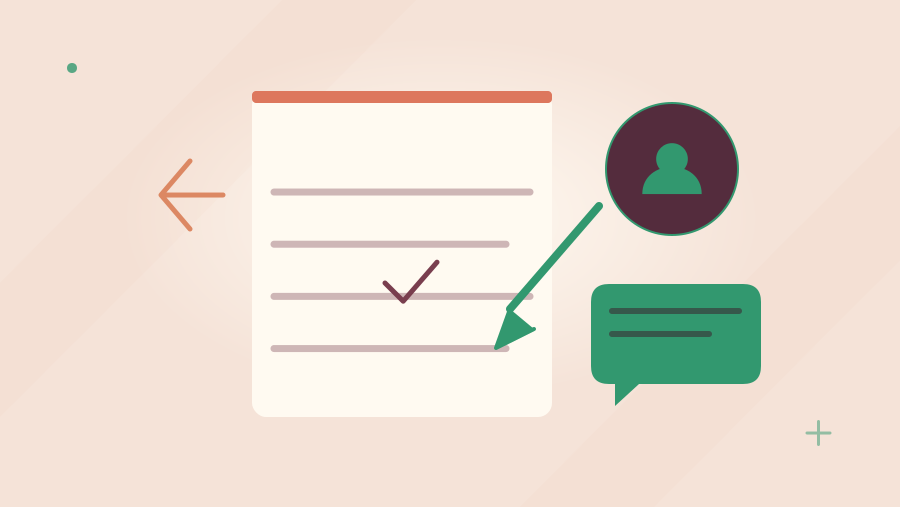
Ask educators to complete representative preparation tasks with and without the proposed workflow where feasible. Record review time, substantive corrections, usability issues, and the suitability of the approved result. These are local pilot observations, not promises about universal workload savings. Keep rejected outputs in a controlled evaluation set if the institution permits retention.
A custom teaching-assistant brief should include examples of acceptable materials, a review rubric, publication permissions, and a way to report defects. White Storm Technologies can develop that workflow around existing content and platforms. Expansion should follow evidence that teachers can reliably inspect and improve the drafts, with a clear owner for what reaches students.
Sources & further reading
Primary references checked for this article. Practical examples are illustrative, not client results.
Apply this to your project.
Talk to us about tools that help educators prepare lessons, practice activities, and feedback while keeping teachers responsible for reviewing materials before learners use them.
Explore AI Teaching Assistants